Reflections on a Miniature Painting with ‘Deccan Ruler’
DOI:
https://doi.org/10.52476/trb.25556Abstract
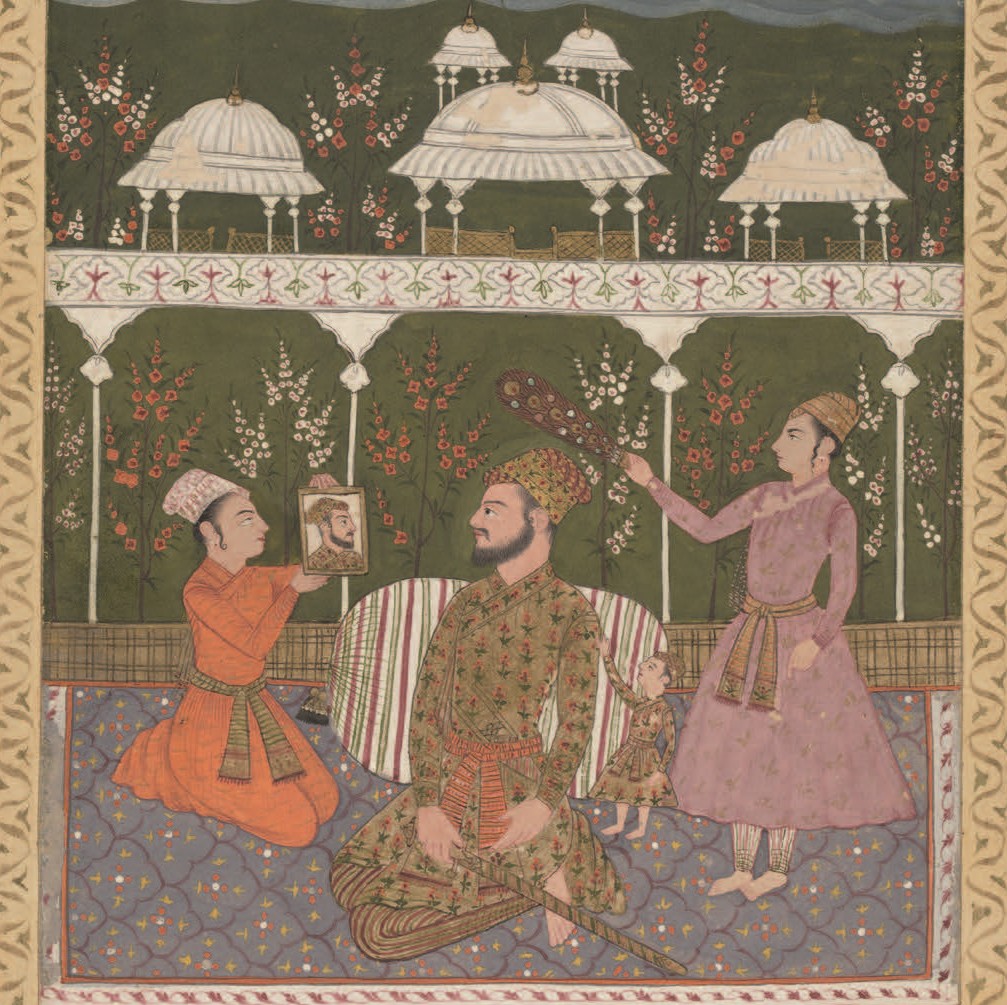
The present short notice examines a rare miniature painting in the Rijksmuseum, likely produced in the Deccan region of India circa 1650-1700. Depicted in the painting are a seated ruler and his servants, a child, and a mirror or portrait. The scene is surmounted by a mirrored Quranic verse (Surah 5:112-114). Through material-technical, iconographic and historical analysis, the central figure can possibly be identified as Muhammad Adil Shah, sultan of Bijapur in South India (r. 1627-56), with his son Ali. The presence of a Dutch-language inscription and paper of Western manufacture point to European involvement, probably via the Dutch East India Company (VOC). An alternative, though far more improbable interpretation identifies the ruler as the Mughal Emperor Shah Jahan, with his son, Dara Shukoh. The image contains esoteric elements, like mirror writing, as well as mystical references to the sacred, inner meaning of princely authority. The combination of text and image suggests a deliberate symbolic layer, though its precise meaning is left intentionally obscured, in keeping with the occult function of these paintings produced in the court circles of the Mughal and Deccan empires.
Downloads
Downloads
Published
Issue
Section

How to Cite