‘I cut from paper all that pleases the eye’
Revisiting the Life and Art of Papercut Virtuoso Elisabeth Rijbergh
DOI:
https://doi.org/10.52476/trb.26696Abstract
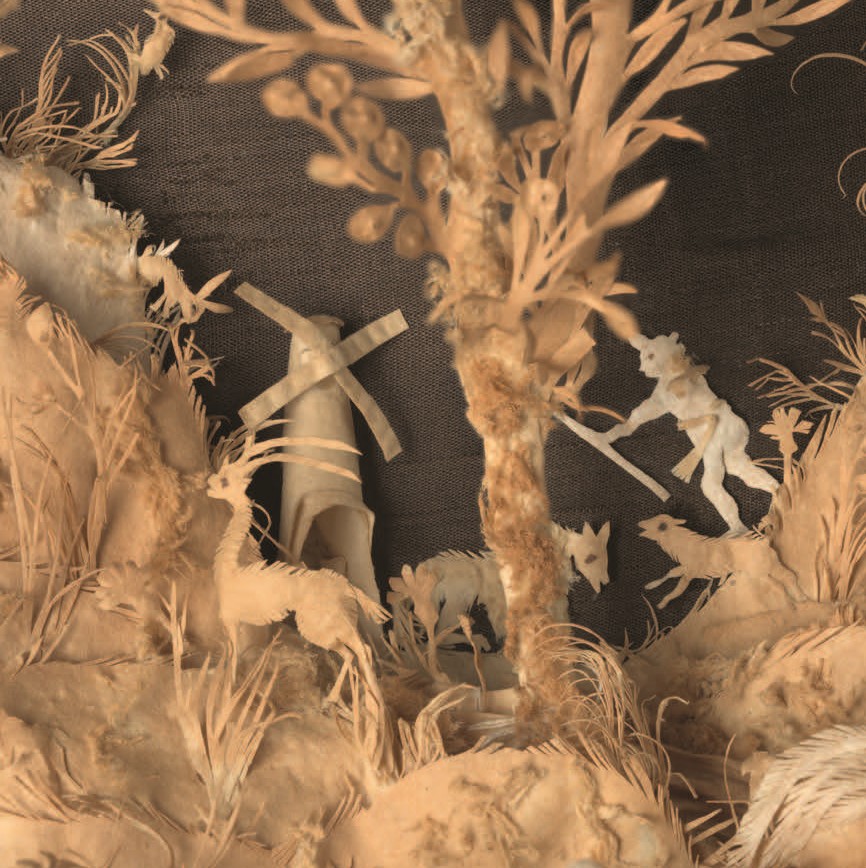
This contribution highlights the work of Elisabeth Rijbergh (1672-1721), a Rotterdam papercut artist who enjoyed great renown in her day. From her art cabinet, Rijbergh showed her complex papercut depictions to the public for a fee and sold her works to a clientele willing to pay considerable sums. These images were highly diverse, ranging from scenes of gardens and landscapes to battle scenes and portraits. Although Rijbergh’s name was preserved in historical travelogues, she essentially fell into obscurity. Over the years, her reputation faded, with her oeuvre thought to have been lost. The recent discovery of a signed and dated papercut held in the Rijksmuseum collection – a diorama long attributed in error – has produced new insights into Rijbergh’s work. Supplementary stylistic and material-technical research has moreover facilitated the attribution of two additional, previously anonymous dioramas. Together, these three papercuts offer the first tangible insight into Rijbergh’s technical skill, narrative power and artistic strategies. With humour, illusion and refinement, she transformed paper into vibrant, narrative worlds that once captivated and still amaze viewers today. The present study places this woman artist again in the art historical spotlight, showing that Rijbergh’s dioramas are not just visual spectacles for enthusiasts to behold, they also provide a window into the creative versatility of late seventeenth-century Dutch art.
Downloads
Downloads
Published
Issue
Section

How to Cite