Chinese and Javanese Features in an Eighteenth-Century Portrait of a European Woman Holding a Child
DOI:
https://doi.org/10.52476/trb.26698Abstract
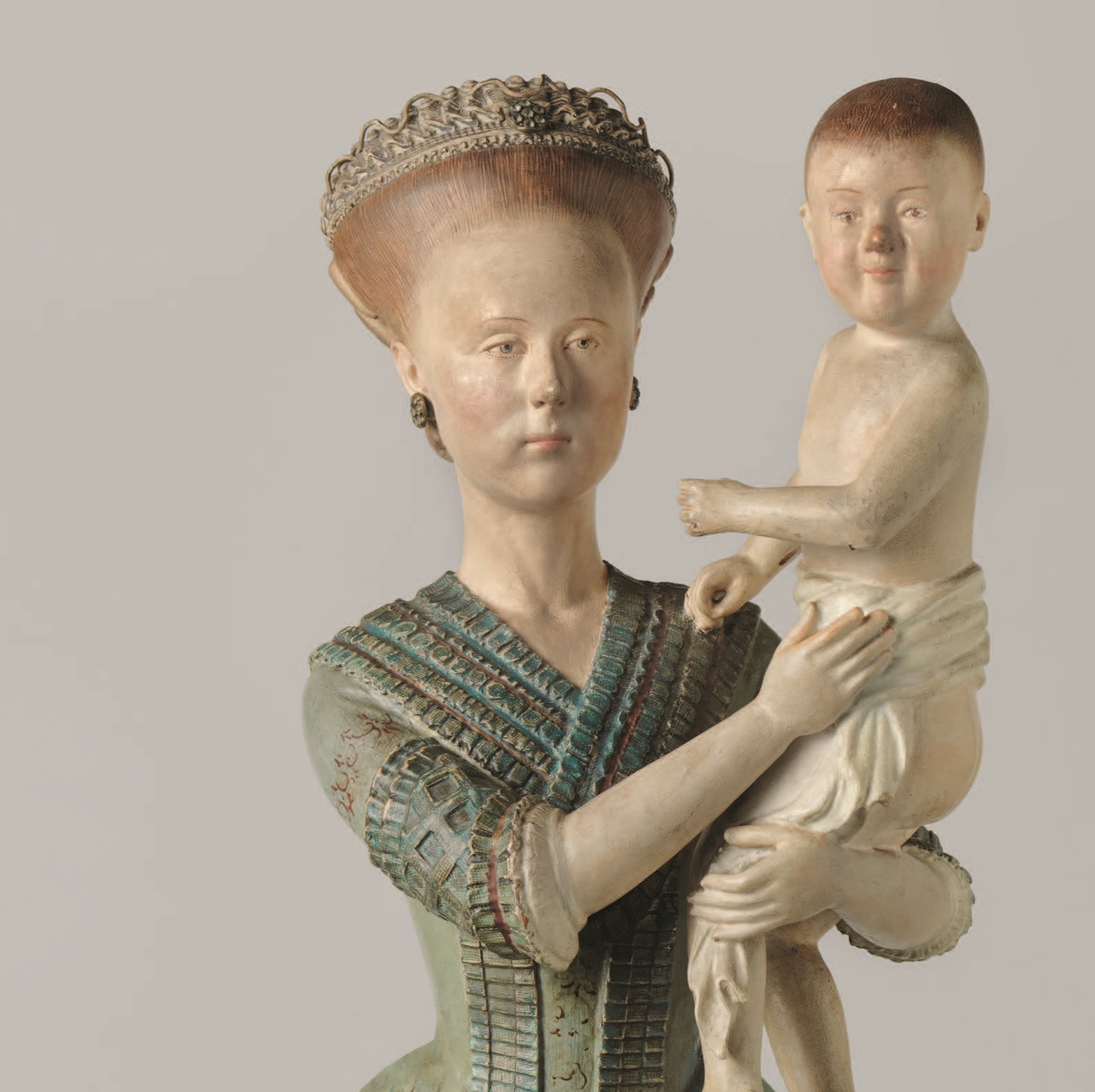
An eighteenth-century wooden statuette of a woman holding a child in the Rijksmuseum has long been attributed to Tan-Che-Qua (Chitqua), a Chinese portrait-maker active in Canton (present-day Guangzhou). This attribution proves untenable in light of the observation that Chitqua is not known to have ever worked in wood. The present article proposes an alternative attribution to an anonymous Chinese artist working in the Dutch settlement of Batavia (now Jakarta). This suggestion is corroborated by a technical analysis of the wood used to carve the sculpture, identified as teak, a material readily available on Java and commonly used by indigenous craftsmen to create detailed figures. Copper studs inserted into the woman’s wood-carved ears are possibly akin to similar accessories adorning figures carved in the Central Javanese Loro Blonyo tradition. A Chinese artist working in the artisans’ district of Batavia could easily have been influenced by his Javanese counterparts. A close comparison with contemporary fashion prints identifies the woman’s attire as an exact rendering of European fashion from the period 1778-90. Moreover, the specificity of the woman’s facial features indicates that the statuette is a portrait. This person is far more likely to have lived in Batavia, where European women could live their lives in relative freedom, versus Canton, a city where European women were forbidden entry. The identity of the sitter has not (yet) been ascertained, but the daughters of the governors-generals of Batavia are tenable candidates. By exploring this statuette, the article aims to expand on existing scholarship, while addressing the visibility – or rather, invisibility – of European women and non-European artists in the written history of the eighteenth-century overseas trade in Asia.
Downloads
Downloads
Published
Issue
Section

How to Cite